


Mi ciudad hoy: A New Civic Model. The 2012 Mexico City Textbook.
- Javier Jileta
- 18 hours ago
- 4 min read
When we speak of civilizations, we typically think of the material traces that defined a given people who lived in a particular time and place. We invoke Roman, Egyptian, Greek, or Chinese civilization, and our minds immediately conjure pyramids, temples, coliseums, walls, and countless monuments.
We tend to associate civilization with its shells and built structures, whatever we choose to call them. Yet we often overlook the intangible imprints that many of these civilizations left behind: the cultural, philosophical, and intellectual legacy that lives among us to this day, independent of anything material.
The Latin word civis means citizen. From it derive city, civilization, and also civism. It is worth marking the distinction between a person and a citizen, because in their capacity as citizens, people acquire particular rights and obligations. They become part of a social dynamic aimed at building, maintaining, and preserving an order.
In Mexico, our Constitution defines "citizens" as persons who have reached the age of 18 and attained legal majority. A civilization, then, is a body of citizens fulfilling rights and obligations within a functioning legal and regulatory framework.
A civilization, in this sense, is the collective social consciousness of where one lives and the norms that govern that place. Buildings and structures do not construct a civilization. They contain it.
Because it is inherently conscious work, building a civilization requires a human process of education and intergenerational transmission of a city's most important values. It means preserving history and legacy, and producing citizens.
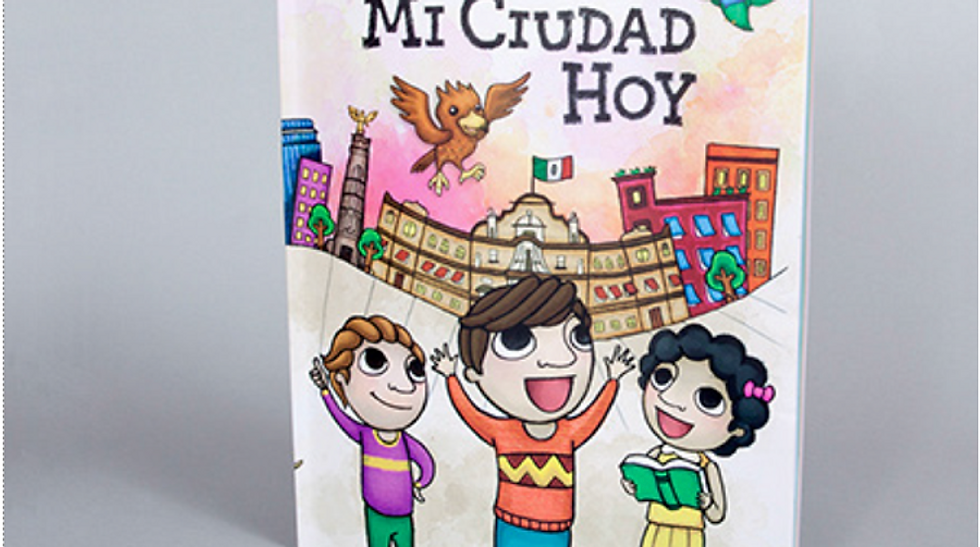
This is what I discovered firsthand when I had the privilege of directing the conceptualization of Mi ciudad hoy, a textbook for children distributed in 2012 to public primary schools in what was then the Federal District.
At the time, the capital remained federal territory and lacked its own constitution. In education, it was entirely dependent on the federal system. Even so, a group of teachers, coordinated by Dr. Alejandra Moreno Toscano, felt compelled to capture the Federal District's forward-looking vision in a document that would give fourth-, fifth-, and sixth-grade students in the city's public schools something practical and engaging: a book that would introduce them to the rights and obligations they would encounter as they grew into life in their city.
Everyone involved shared one conviction: more than a textbook, this needed to be a civics book, one that spoke to what it means to be an inhabitant of the Mexican capital, a capital cementing its place among the most progressive cities in the world.
The challenge was not simple. Working with children requires a different conceptual register. But the experience was entirely worthwhile. Topics such as mobility, guarantees for all persons, emergency response, and rights all had to be adapted so that the city's children would understand what their city was advancing.
We wanted the project to be as welcoming and enjoyable as possible. Beyond a team of educators, we worked with a talented illustrator who helped translate the concepts into beautiful drawings. Across the book's six chapters, endemic Mexican animals accompanied children through each theme: a guajolote (wild turkey), a hare, a grasshopper, an owl, an eagle, and a hummingbird.
And yet, again: the book was only the shell. Into that shell we pressed a set of concepts, values, and ideas about a new vision of the city. A prosperous, progressive Mexico City, one in which human rights and values apply to every person regardless of origin, social or economic condition, or personal preferences.
We wanted children to understand that they live in one of the most privileged and forward-looking cities in the world. A city that is interconnected and global, a vanguard within the country itself.
This book, though aimed at children, also transformed every adult who worked on it. It made us look at the city with fresh eyes and real wonder at how far we have come in making it one of the world's most significant cities. That was what we wanted to convey from the start.
I still remember that once the book was finished, staff from the Federal District's Secretariat of Education, led by Mario Delgado Carrillo, stationed themselves outside schools to distribute it one by one. As mentioned, we still had no local constitution at the time, which meant the federal government held sole jurisdiction over textbooks.
The Mi ciudad hoy project was deeply meaningful for everything it represents: not just the making of a book, but the act of transmitting to the children of the city where I grew up the principles that make us better people and global citizens. Respect, justice, equality, access to rights, the democratization of services, a sense of community.
Mi ciudad hoy is a book I hold close within my professional journey. The team that accompanied me, José Carlos Barranco in particular, always pushed to finish quickly and effectively. This publication reminds me that being a good citizen does not only help me engage with society in a healthy way. It reminds me that I am myself an example for future generations, and that my work for other people's rights and for building a better city benefits me and leaves a legacy for all of them. A legacy that goes beyond the material. That is what it means to build a civilization.
Frequently Asked Questions
What is Mi ciudad hoy?
Mi ciudad hoy (My City Today) is a 2012 civics textbook distributed to fourth-, fifth-, and sixth-grade students in public primary schools across the Federal District (now Mexico City). Developed under the coordination of Dr. Alejandra Moreno Toscano, it introduced children to the rights, obligations, and values of living in the city.
Why was distributing the book logistically difficult?
In 2012, the Federal District lacked its own constitution and education fell under federal jurisdiction, which meant the federal government held sole authority over official textbooks. Staff from the Secretariat of Education, led by Mario Delgado Carrillo, had to distribute copies directly outside school gates, one by one, rather than through official channels.
What topics and characters did Mi ciudad hoy cover?
The book addressed mobility, emergency response, constitutional guarantees, rights, and civic values, all adapted for a primary-school audience. Six endemic Mexican animals served as guides across the six chapters: a guajolote (wild turkey), a hare, a grasshopper, an owl, an eagle, and a hummingbird.


Comments